

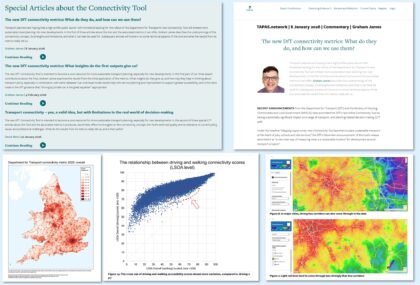
 Planners, transport planners and policy analysts looking to use the DfT’s new connectivity metrics and tools can benefit from the latest free-to-access analysis from one of our experts.
In his expert commentaries now available on the TAPAS.network website, our Technical Director Graham James has described how these new resources work, their strengths and limitations, what they can best be used for, and some of the results they show.
Recent government announcements by DfT and MHCLG have sparked further interest in these metrics and tools. DfT says the metrics will be a new national standard for measuring connectivity. And the latest draft National Planning Policy Framework says the connectivity tool should be part of the evidence base for selecting and assessing development sites.
Graham’s first article takes readers through how the connectivity scores are built up, what the accompanying tools do, and how we can use the data. What do the scores actually measure? What forms of transport and destinations are included? Are the outputs robust and reliable? What can we do with them? And does the computer now provide all the answers we need?
The second article looks at some of the results from the metrics. What insights do they give us? How can we dig deeper into the results, and combine the metrics with other datasets? And how do they help us think about transport policy?
The two articles were first published earlier this year in Local Transport Today, the leading journal covering the UK’s transport policy, planning and delivery. They are now available to everyone via TAPAS.network, the platform aimed at in-depth discussion of challenging transport issues with expert contributors known for their incisive and original thinking. No registration is needed, but registered users can make comments on any of the articles.