
Preparing for Pavement Parking Enforcement Powers – What Councils Need to Do Now
November 2026
New powers to enforce against pavement parking are expected to be in place within a few months, for English councils outside London. Councillors, stakeholders and the public will be expecting councils to make use of those powers straight away. What do these authorities need to do now, to be ready and on the front foot?
The story so far
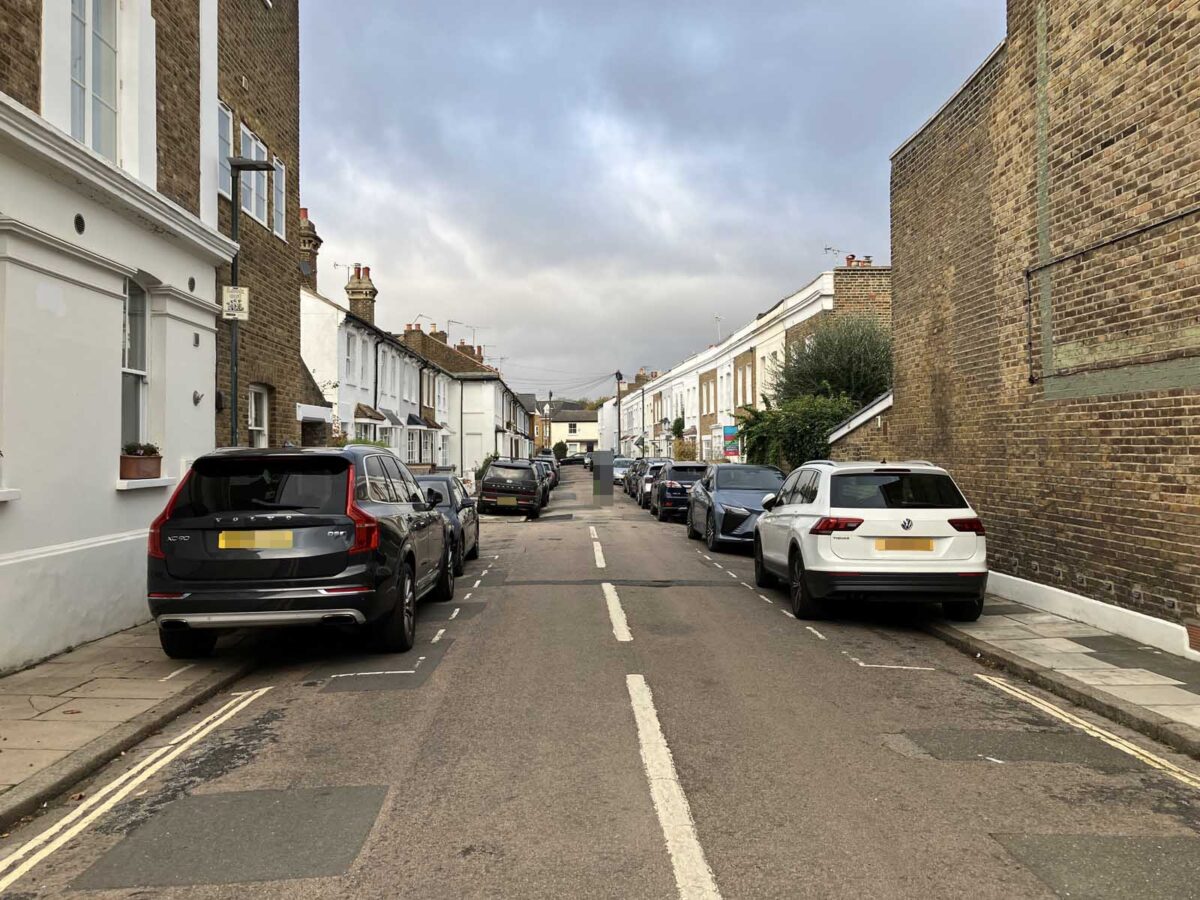
Pavement parking is when motor vehicles are parked on footways or highway verges. It is a convenience for many drivers, and a way of creating parking supply or maintaining traffic flow in constrained streets. But for people walking or wheeling it can make trips harder, less safe, more stressful or even impossible. It can also damage paving and grass surfaces.
In England outside London, it is allowed by default. Current laws, powers and guidance to manage it are often seen as ineffective in practice. This has been a long-standing concern. A government consultation in 2021 floated the option of a national ban with local exemptions. But that option was not taken forward.
The government’s approach, announced in January 2026, is instead two-pronged:
- Local highway authorities (in their role as traffic authority) will be given power to enforce against “obstructive and unnecessary” parking.
- Local transport authorities will be given power to ban pavement parking entirely, in all or parts of their area.
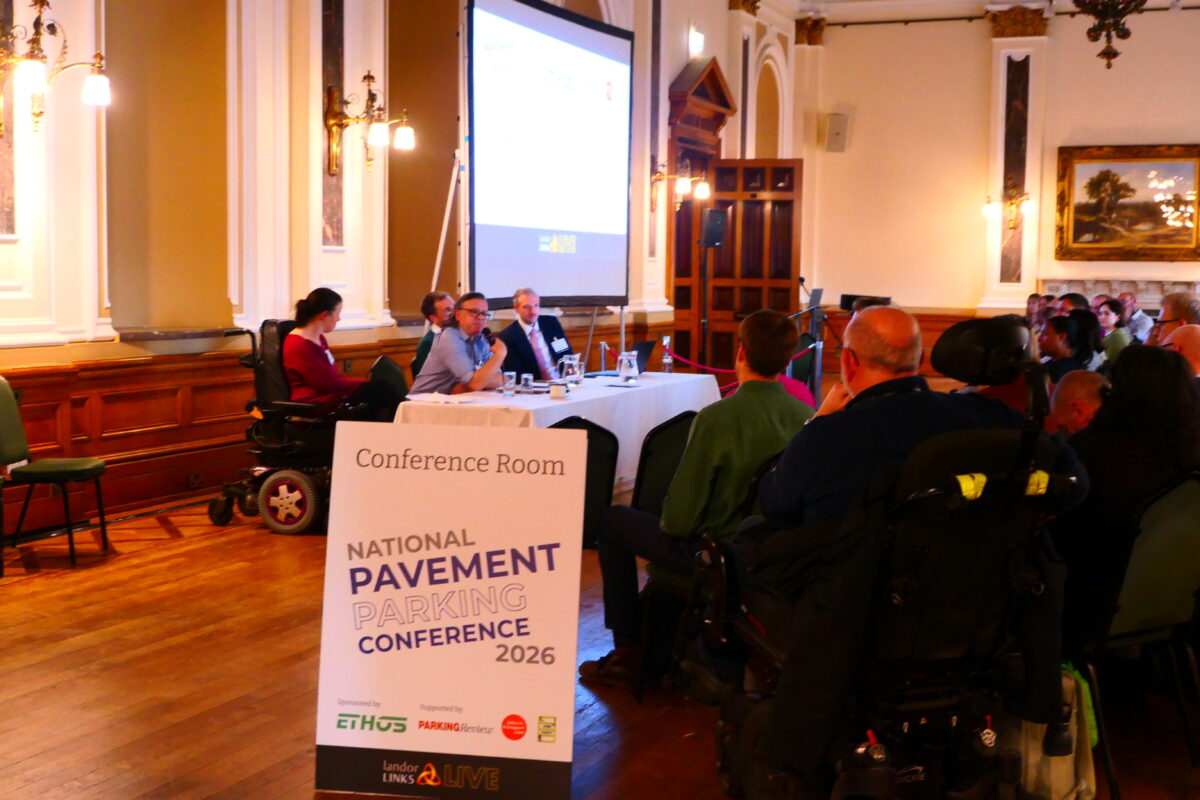
At the recent National Pavement Parking Conference in Birmingham, the likely shape and timelines for these two new powers became a little clearer. The first one, covering obstructive and unnecessary parking, is coming up soon. This article concentrates on what councils need to do to get ready for it.
What’s happening on obstructive parking ?
The power to enforce against obstructive and unnecessary parking is expected to go live in February 2027, although this is not finalised.
The current plan is to simply decriminalise an existing offence – most likely Regulation 103 of The Road Vehicles (Construction and Use) Regulations 1986 which prohibits motor vehicles from causing “any unnecessary obstruction of the road”. In civil parking enforcement areas (which cover nearly everywhere) this would become a civil contravention, which can be enforced just like other parking contraventions.
The government is close to laying the required statutory instrument before Parliament. Accompanying statutory guidance is also expected.
The immediate agenda
Three immediate issues need to be addressed.
Councils need to get ready. Highway authorities, and district councils who carry out on-street parking enforcement under delegated powers, will need to plan how they incorporate the new power into their front-line enforcement operations. This needs doing soon, to be ready for the inevitable pressure to start using it. For example, how will they tackle enforcement in areas where there is little routine enforcement presence today? We cover this in more detail below.
Clarity over what is “obstructive and unnecessary”. The existing regulations don’t define either obstruction or necessity. There is some case law but mostly about obstructing motor traffic rather than pedestrians on footways. And in practice, different people – whether they are drivers or pedestrians – will have different perceptions. What’s obstructive to one person will be fine for another. What’s necessary in one person’s eyes will be pure convenience in another’s.
But what is or isn’t allowed needs to be clear to drivers and the public, and applied consistently by civil enforcement officers (CEOs), so that everyone knows where they stand. The statutory guidance – or perhaps PATROL on behalf of the councils – may try to set a standard in this respect, but ultimately only the courts can decide what the law actually means.
So there may be an initial, difficult period with a large proportion of PCNs being challenged, especially as the plan is to do without additional on-street signs and lines. There could be a bow-wave of work for councils and adjudicators to respond to representations and appeals, until precedents have settled (or perhaps cases tested in court) and the public have adjusted.
Awareness-raising. National and local awareness-raising campaigns will be needed in the run-up to starting enforcement. Councils may also choose (or be advised) to implement transitional measures, such as using informative letters rather than PCNs for an initial period.
What do councils need to do now?
For councils, the most urgent task is to think about how you will bring the new power into your enforcement operations – both on-street and in the back office.
Plan and prioritise. What streets will you be enforcing, proactively or reactively? Councillors and stakeholders will soon be asking.
- In areas with a high routine enforcement presence, such as controlled parking zones or town centres, it may be as simple as adding pavement parking to the list of issues that CEOs are looking out for on existing duties.
- In other areas, such as uncontrolled suburban streets where there is little or no routine enforcement presence, enforcement might only be reactive and/or intelligence-led. It may not be practical or affordable to respond directly to individual reports (particularly as obstructive parking is often transient) but these can be used to build-up an picture for targeting planned enforcement.
- Some locations will gain importance and sensitivity – perhaps routes to schools, other community facilities, bus stops or stations. These could be moved up the priority or frequency list for patrols.
- Be ready to adjust the prioritisation in the light of initial experience.
- Back-office operations will also be affected. Internal criteria for handling representations and appeals will need updating. What is your appetite and budget, in the early months, for defending PCNs in what could be a rapidly-developing area of law and practice?
Budget and staffing.
- Even if no additional patrol hours are planned, there may be startup costs in time or money, such as training, to start using the new power, and for handling an initial surge of challenges.
- Can additional budget be made available to support this, or to introduce additional enforcement resources?
- How far is this likely to be covered by additional PCN income?
- This will also feed into the enforcement plan. There may be different options depending on the budget available.
Training and guidance. With the current uncertainty over what will count as “obstructive and unnecessary”, it may not yet be practical to start staff training, or to update guidance documents and webpages. But it’s worth having a plan for doing that. Background information such as ‘why are we doing this?’ can be prepared first. Once the rules are clearer (or as clear as they can be to start with) these details can be slotted-in.
Communications. It’s not yet clear whether and when there will be a national communications campaign that councils can bolt onto. But it’s worth getting ready for the undoubted need to communicate the new enforcement regime to councillors, the public and stakeholders. Publishing the enforcement policy may also help with communications.